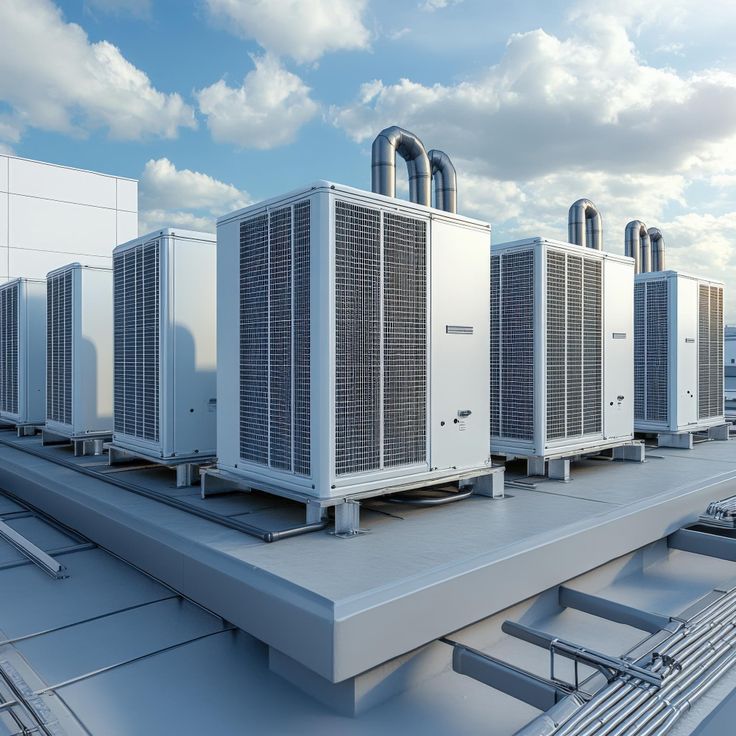
انظمة التدفئة – التهوية – تكييف الهواء HVAC systems
وصف الخدمة Service Description
المواصفات الفنية لنظام HVAC للمعامل
1. المتطلبات العامة
- توفير تهوية، تكييف، وتحكم في جودة الهواء لجميع المختبرات وفق معايير ISO 14644-1 وASHRAE 170.
- الحفاظ على ثبات درجة الحرارة ±1 °C، والرطوبة ±5%.
- الحفاظ على فروق ضغط الهواء بين المناطق: ضغط إيجابي للمناطق النظيفة، ضغط سلبي للمختبرات الكيميائية أو ذات الأبخرة.
- النظام يجب أن يكون موفر للطاقة، مزود بمحركات VFD للتحكم في سرعة المراوح والمضخات.
2. وحدات معالجة الهواء (AHU)
- وحدات معالجة هواء مودولارية، مقاومة للتآكل، ومناسبة للمواد الكيميائية.
- المرشحات:
- مرشح أولي G3/G4 قابل للإزالة والغسل.
- مرشح HEPA H13/H14 للمناطق النظيفة.
- ملفات التدفئة والتبريد: مصنوعة من النحاس/الألمنيوم أو الفولاذ المقاوم للصدأ، متوافقة مع مياه التبريد أو أنظمة DX.
- المراوح: مراوح منخفضة الضوضاء والاهتزاز، إما منحنى أمامي أو Plug Fans.
- تجهيز AHU بوحدات تحكم بالرطوبة وحساسات للحرارة والضغط.
- سهولة الوصول للصيانة واستبدال المرشحات.
3. القنوات الهوائية (Ducting)
- تصنع من الصلب المجلفن عالي الجودة، محكمة الإغلاق ومانعة للتسريب.
- مبطنة داخليًا بعازل صوتي حسب الحاجة.
- تشمل المخمدات القابلة للتعديل لكل مختبر للتحكم في كمية الهواء الموزع.
- القنوات الخاصة بالمناطق الحساسة ملساء، مقاومة للتآكل، وسهلة التنظيف.
4. توزيع الهواء
- موزعات الهواء وشبكاته مصنوعة من الفولاذ المقاوم للصدأ أو المطلي بالبودرة، سهلة التنظيف.
- استخدام موزعات Laminar Flow لغرف النظافة حسب الحاجة.
- قنوات العائد منفصلة لضمان الضغط السلبي أو الإيجابي المطلوب لكل منطقة.
5. التحكم في الضغط
- المحافظة على فروق ضغط ثابتة:
- الضغط السلبي: مختبرات المواد الكيميائية أو الأبخرة.
- الضغط الإيجابي: غرف النظافة أو التخزين للمواد الحساسة.
- تركيب أجهزة قياس ضغط مع عرض محلي وإمكانية ربط بالمراقبة عن بعد.
6. التحكم في درجة الحرارة والرطوبة
- درجة الحرارة: ±1 °C استقرار.
- الرطوبة النسبية: ±5% استقرار.
- إمكانية ضبط إعدادات مختلفة لكل مختبر أو منطقة عبر PLC أو BMS.
- نظام تحكم مركزي متكامل مع لوحات تحكم محلية.
7. نظام العادم
- مخصص لشفاطات الأبخرة والمختبرات الرطبة والمناطق الكيميائية.
- مراوح مقاومة للتآكل والمواد الكيميائية، مع عزل الاهتزاز.
- تصريف الهواء وفق اللوائح البيئية المحلية لضمان الأمان.
Technical Specifications – HVAC for Laboratories
1. General Requirements
- The HVAC system shall provide ventilation, air conditioning, and air quality control according to laboratory standards.
- System design shall comply with ISO 14644-1 (Cleanroom Standards), ASHRAE 170 (Laboratory Ventilation), and local safety regulations.
- The system must maintain constant temperature, humidity, and air pressure differentials to avoid contamination between areas.
- The system must be energy-efficient with variable frequency drives (VFDs) for fans and pumps.
2. Air Handling Units (AHU)
- AHUs shall be modular and corrosion-resistant, suitable for chemical-lab environments.
- Filters:
- Pre-filter: G4/G3 (removable, washable).
- HEPA filter: H13/H14 for cleanrooms and critical areas.
- Cooling & Heating Coils: Copper/aluminum or stainless steel, designed for chilled water or DX systems.
- Fans: Forward-curved or plug fans with low noise and vibration.
- AHUs shall be equipped with humidity control and sensors.
- AHUs must allow easy access for maintenance and filter replacement.
3. Ducting
- Ducts constructed of galvanized steel with airtight joints, internally lined with sound-absorbing material if required.
- All ducting in critical areas shall be smooth, sealed, and leak-proof.
- Branch ducts to laboratories must have adjustable volume dampers.
4. Air Distribution
- Diffusers and grilles: Stainless steel or powder-coated steel, easy to clean.
- Laminar airflow diffusers for cleanrooms if required.
- Return air: Separate ducts for exhaust air to maintain negative pressure in hazardous labs or positive pressure in cleanrooms.
5. Pressure Control
- The system shall maintain pressure differentials between zones:
- Negative pressure for chemical/fume labs.
- Positive pressure for cleanrooms or storage of sensitive chemicals.
- Pressure monitoring devices installed with local display and remote monitoring capability.
6. Temperature and Humidity Control
- Temperature control: ±1 °C stability.
- Relative Humidity (RH) control: ±5% stability.
- Control panels with PLC or BMS integration.
- Adjustable setpoints for each laboratory or zone.
7. Exhaust System
- Dedicated exhaust for fume hoods, wet labs, and chemical areas.
- Exhaust fans must be corrosion-resistant, chemical-resistant, and vibration-isolated.
- Air must be discharged safely according to local environmental regulations.